Roles & permissions for multi-team workspaces
Air - Nov 2022 to Mar 2023
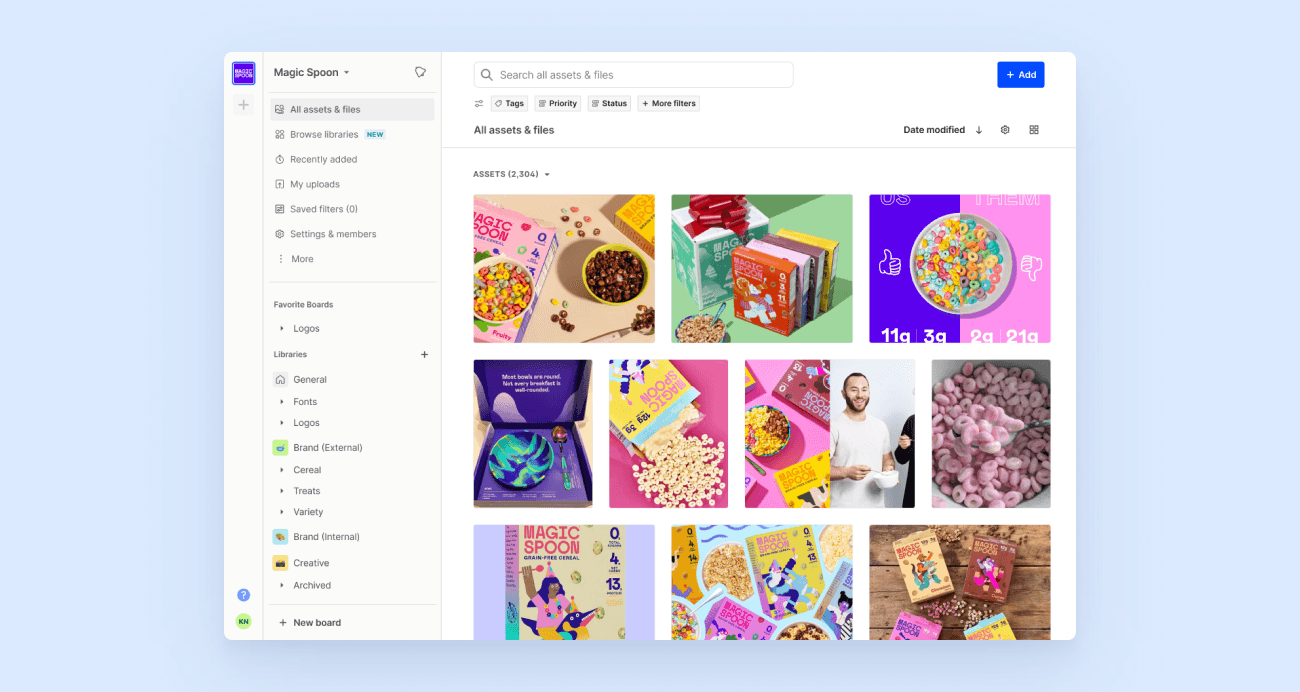
Context
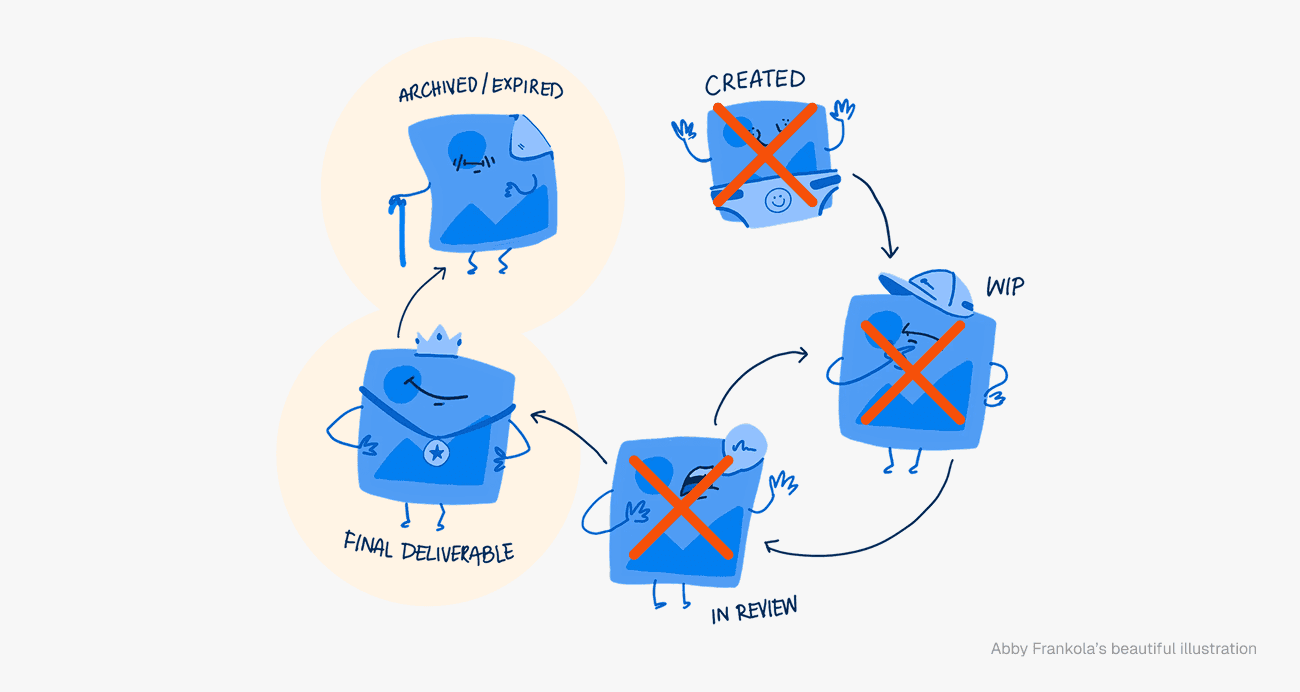
Air is a creative asset management platform where teams collect, approve, and share visual content. At its core, Air helps marketing and creative teams manage the entire lifecycle of assets, from ideation through final delivery.
I joined the project after the Product Manager and Lead Product Designer had defined the problem space and established an initial design direction.
I collaborated with the Product Manager, Lead Product Designer and 4 Engineers, transitioning from a supporting role, to leading design decisions around permissions and member management.

Problem
Although Air offered collaborative tools like comments and visual markups, teams weren't using them. Findings from a Mini Research Sprint revealed that because teams struggled to maintain organizational structure in shared workspaces, Air was only being used for final deliverables.
To prevent misuse and disorganization, teams kept creation, edits, and revisions outside of Air in Dropbox, Google Drive, or local hard drives. Teams didn't just need a new organization framework to support in-progress work, they needed a clear system that could control who could see and edit content.
Solution
The team introduced a new primitive in Air's product architecture: Libraries. Sitting between workspaces and boards, Libraries allowed teams to group boards together and apply access controls to all content within them.
Libraries was Air's solution for giving teams access-controlled spaces to organize content by department or campaign.
Research
After assisting with user testing as observe and notetaker, I facilitated a synthesis session with the Product Manager and Lead Product Designer to translate themes into key HMW statements:
How might we differentiate libraries from top-level boards?
How might we centralize member and role management for workspaces and libraries?
How might we ensure libraries meet enterprise-level privacy and security needs?
Our session revealed that library roles and permissions were still confusing and unclear. We had been testing some concepts around team spaces, but permissions needed more thought. Making a decision for privacy controls, permissions, and roles was most important for libraries because it was part of initial setup.
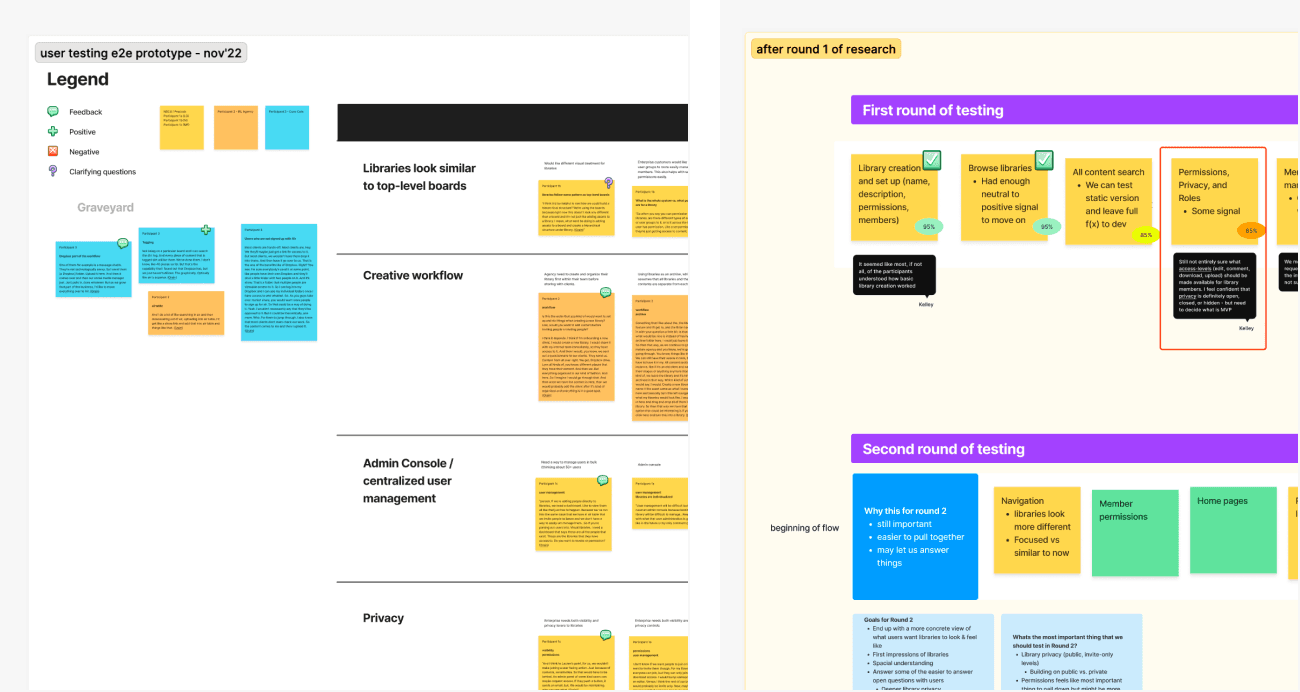
Figjams after research sessions to synthesize and align on next steps
I continued to research and analyzed how roles and guests were defined in other productivity tools like Asana, Slack, and Notion, outlining benefits and risks of potential solutions in the context of Air.
This included mapping out paradigms like three-level roles (Admin/Owner, Member, Guest) versus two-level roles, and creating a privacy matrix that mapped visibility (Visible, Hidden) against privacy (Public, Private).
Framing
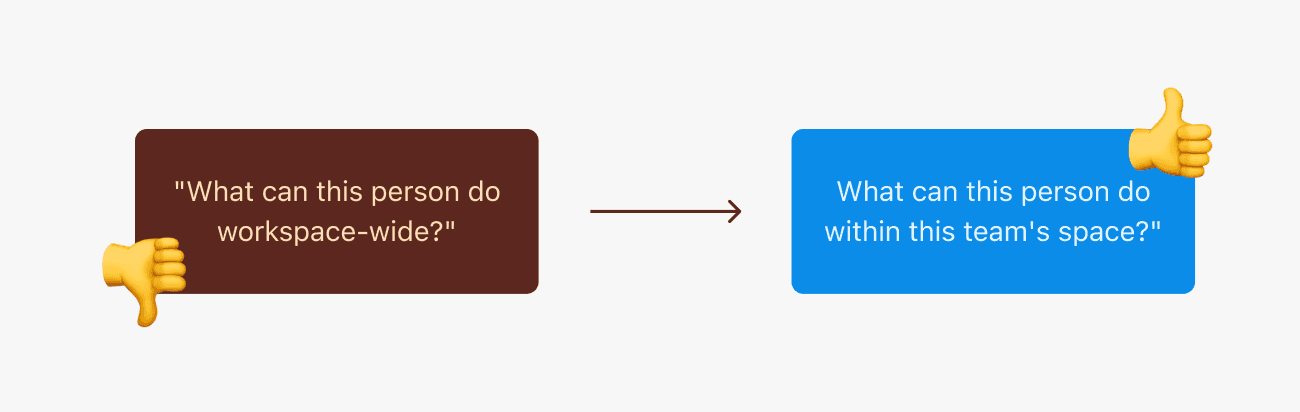
The existing permissions model asked: "What can this person do workspace-wide?" Every board and asset inherited the same access level, with no granular control.
We needed to introduce a new way of thinking about team ownership, a harder path that required redesigning how permissions worked across the entire platform. The new question became: "What can this person do within this team's space?"
Presenting research and recommendations led to two significant outcomes. First, we descoped guests from release: only ~12% of paid workspaces used guests, and most users said they use share links instead. Second, my research sparked broader conversations in EPD. Product and Engineering started a wider effort to simplify the workspace-level permissions model, benefiting both current and future projects.
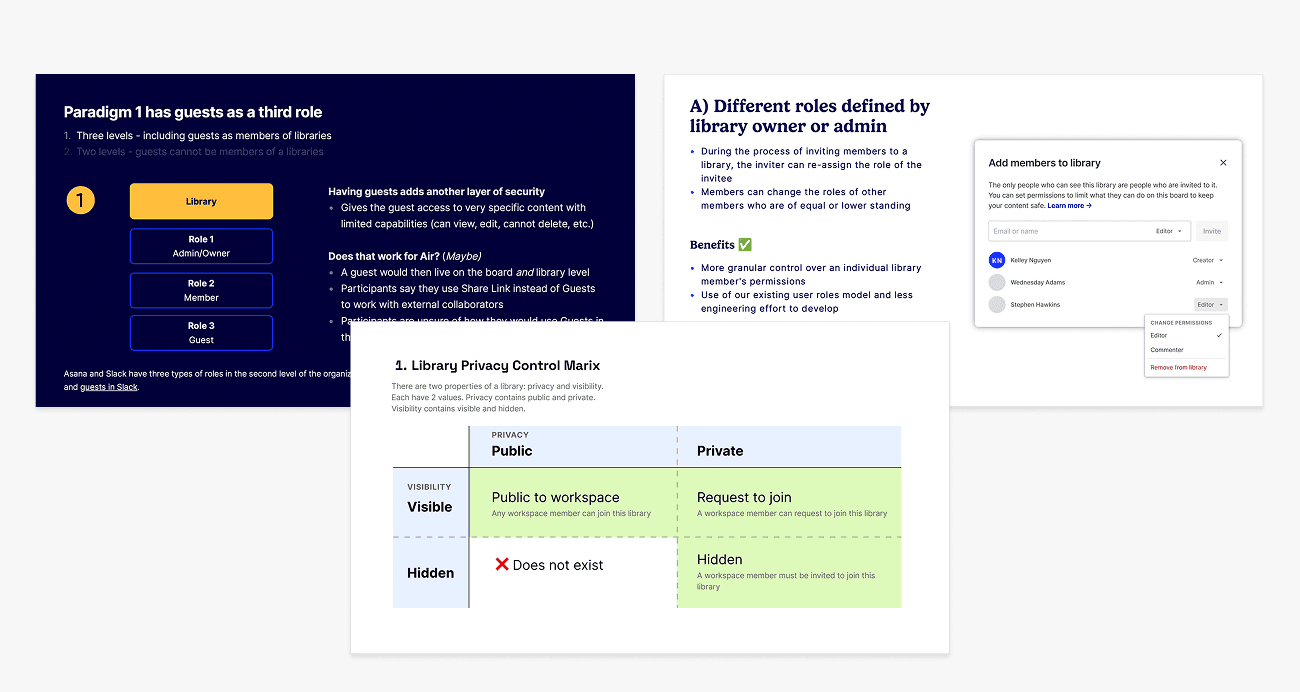
Slides from a few presenttions outlining potential models
Iterations
Libraries took an iterative approach to design, feedback and release through Alpha, Beta, and General Availability. The PM and I proactively gathered customer and internal feedback after each release to log and prioritize improvements. As part of an initiative to increase velocity and tighten feedback loops, we were able to drastically reduce the time between inception and launch of an MVP from 1 year to 6 months.
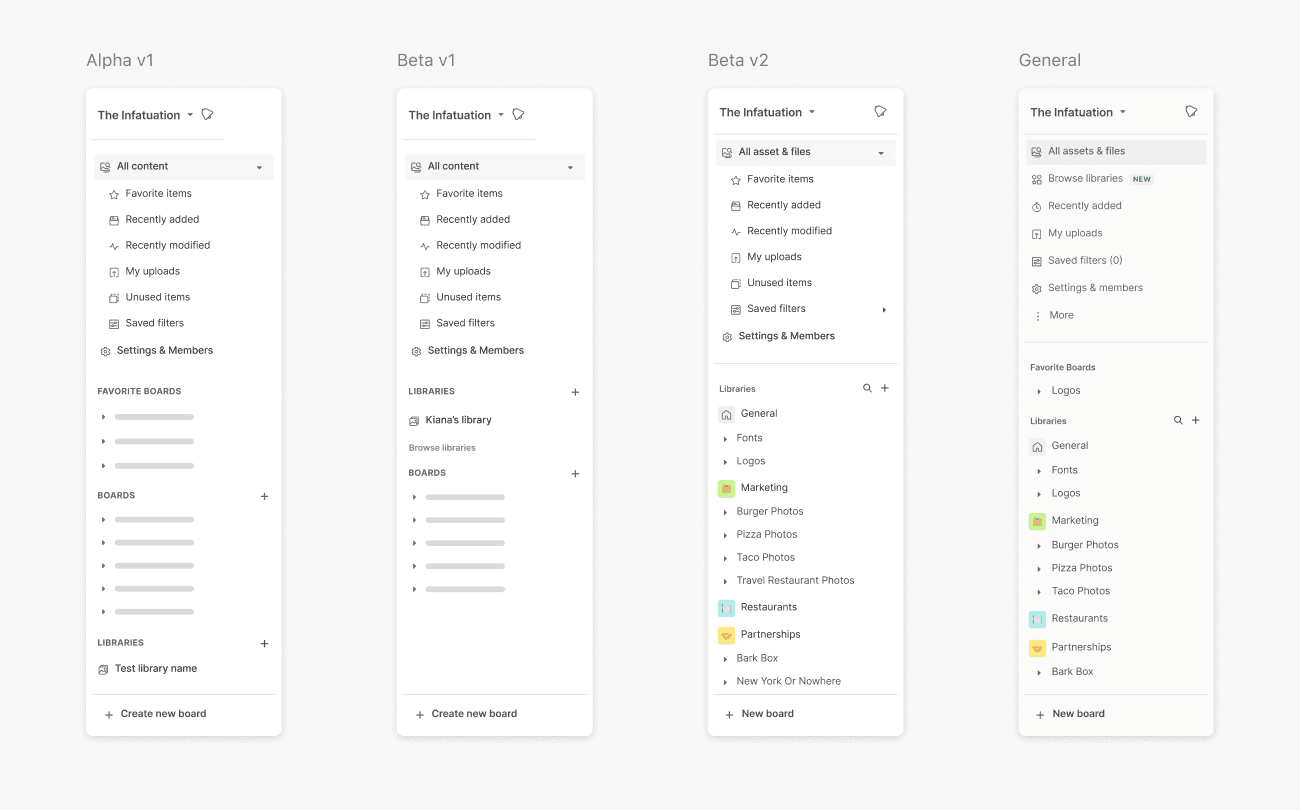
How sidebar navigation progressed with each release
Solution
All workspace boards in General library
Transitioning a workspace to libraries meant migrating all workspace boards (which are accessible to every member) into a “General” library.
Creating library-specific roles
Changing a member's library role would override the permissions assigned at the workspace level. This gave users more control over permissions within spaces.
Introducing the Workspace Owner
For users in admin or IT positions responsible for managing seats, this role included all Workspace Admin permissions, as well as the ability to view all libraries and their members.
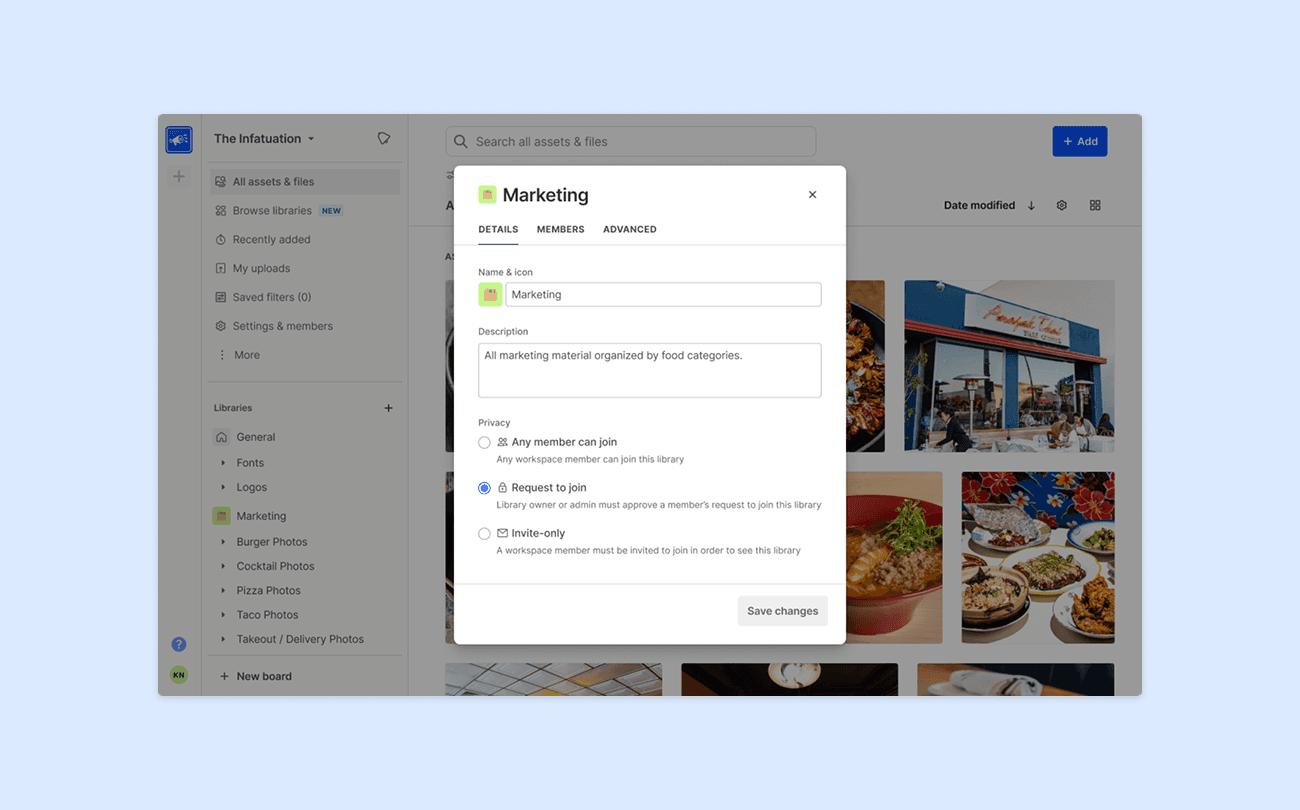
Managing the details of a library
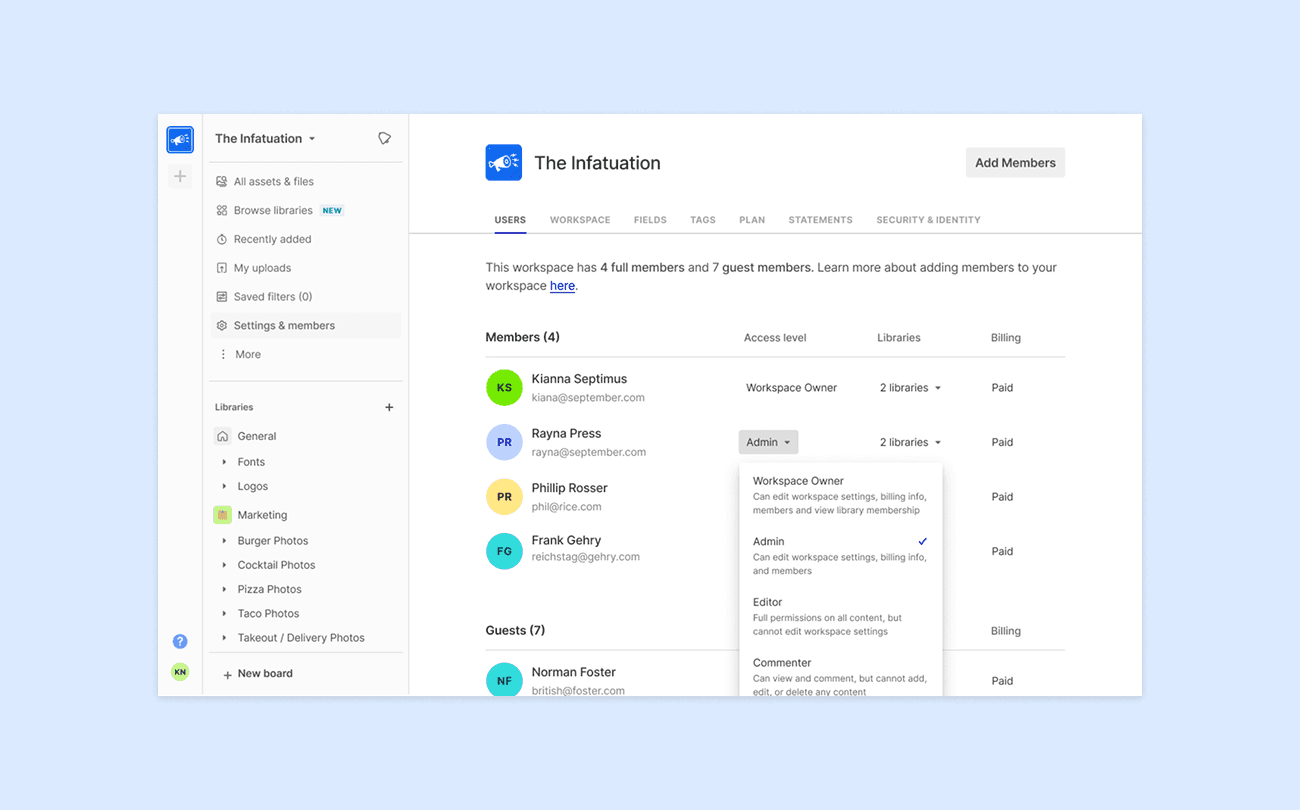
How member management changes with roles
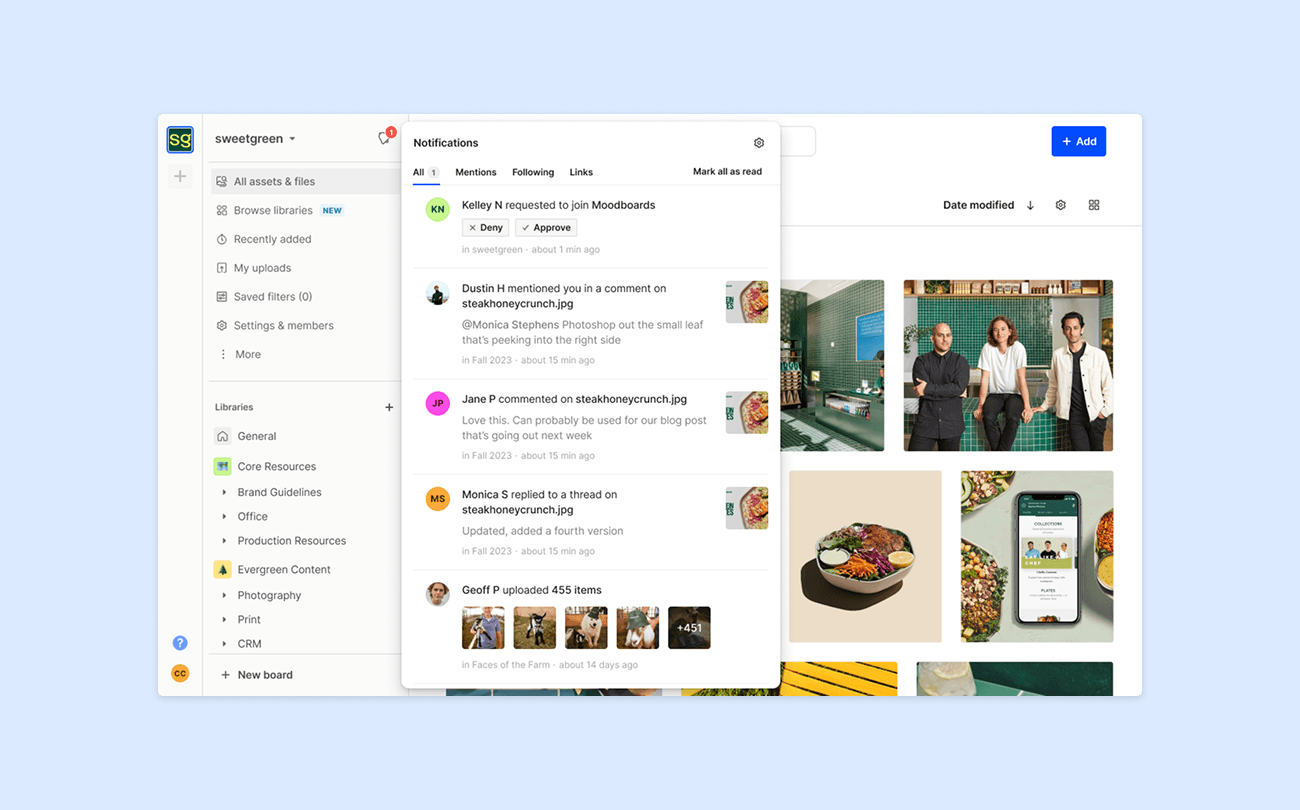
Sending requests to join private libraries
Impact
Releasing this feature contributed to a 120% increase in average contract value and 143% increase in expansion to enterprise deals in 2024. Libraries continues to be a core offering for enterprise clients and directly impacted major customers like NBC Peacock, Togethxr, and SoundCloud.
Overall, this project contributed to a 26% increase in net new ARR in 2024. Now that Air had revised and refined the product structure to support multi-team organizations, the business could unlock more potential growth and expansion with new and existing customers.